
From disposable gloves to CO₂ capture: Aarhus researchers see new potential in waste

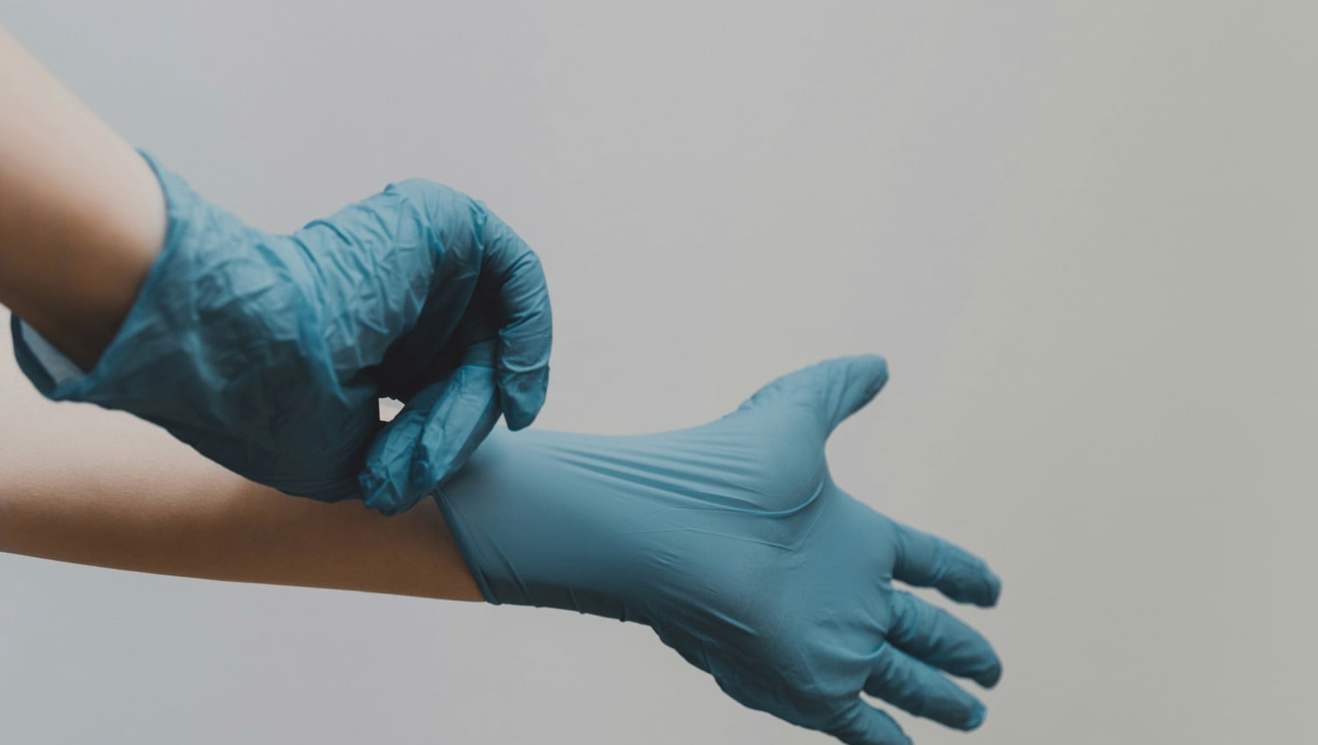
Millions of used rubber gloves end up in incineration or landfill every year. But now researchers at Aarhus University have developed a method to convert the material into a product that can capture CO₂.
“In our experiments, we transformed the glove so that it can capture CO₂ instead of becoming a waste product that emits CO₂ and other harmful gases when burned,” says Simon Kildahl, postdoc at the Department of Chemistry at Aarhus University and leader of the project, in a press release.
The research results have just been published in the journal Chem and point to a possible new way to combine waste management with climate technology.
Billions of gloves end up as waste
Globally, over 100 billion nitrile rubber gloves are produced every year. Most are used in the healthcare sector and are only used once before being discarded.
The material is a synthetic polymer that is chemically similar to plastic and is made from oil. This is why it is difficult to recycle and often ends up in incinerators.
“A plastic bottle can be recycled, as we know from the deposit system. But some other synthetic polymer materials are problematic because they cannot be recycled and therefore often end up being burned, as is the case with the rubber glove,” says Simon Kildahl.
The researchers have therefore investigated whether the material can be given a new life instead of becoming waste.
Transforms into material that can capture CO₂
In the lab, the researchers have developed a chemical process that breaks down the used gloves and converts them into a material that can capture CO₂ from flue gas.
The method involves the rubber reacting with a ruthenium-based catalyst and hydrogen gas. The result is a material that can capture CO₂ from industrial emissions, for example.
“Specifically, we tear the rubber glove into small pieces. It reacts with a ruthenium-based catalyst and hydrogen gas, and then it can capture CO₂ from artificial flue gas,” explains Simon Kildahl.
According to the researcher, the technology could, in principle, be used in power plants or other facilities with CO₂ emissions.
Still an early technology
The project is developed in the Skydstrup group, which is part of the Novo Nordisk Foundation CO2 Research Center (CORC) based at Aarhus University.
The research center works with technologies to capture or recycle CO₂, including through power-to-X solutions.
The research team has previously shown how materials such as polyurethane foam from mattresses and epoxy and glass fibers from wind turbine blades can be recycled – materials that have traditionally been difficult to recycle.
Although the results are promising, the technology is still at an early stage. The trials are currently on a laboratory scale.
“We’re working with gram scale right now and the reactions and results may look different when we increase the levels to kilo scale. But our results look promising,” says Simon Kildahl.
The researchers themselves estimate the technology to be around TRL level 3-4 – an early stage between basic research and practical application.
The goal now is to make the process more scalable and economically viable, including finding cheaper catalysts and improving the material’s ability to capture CO₂.