Hybrid Intelligence: A Human-Centric Path Through the AI Revolution
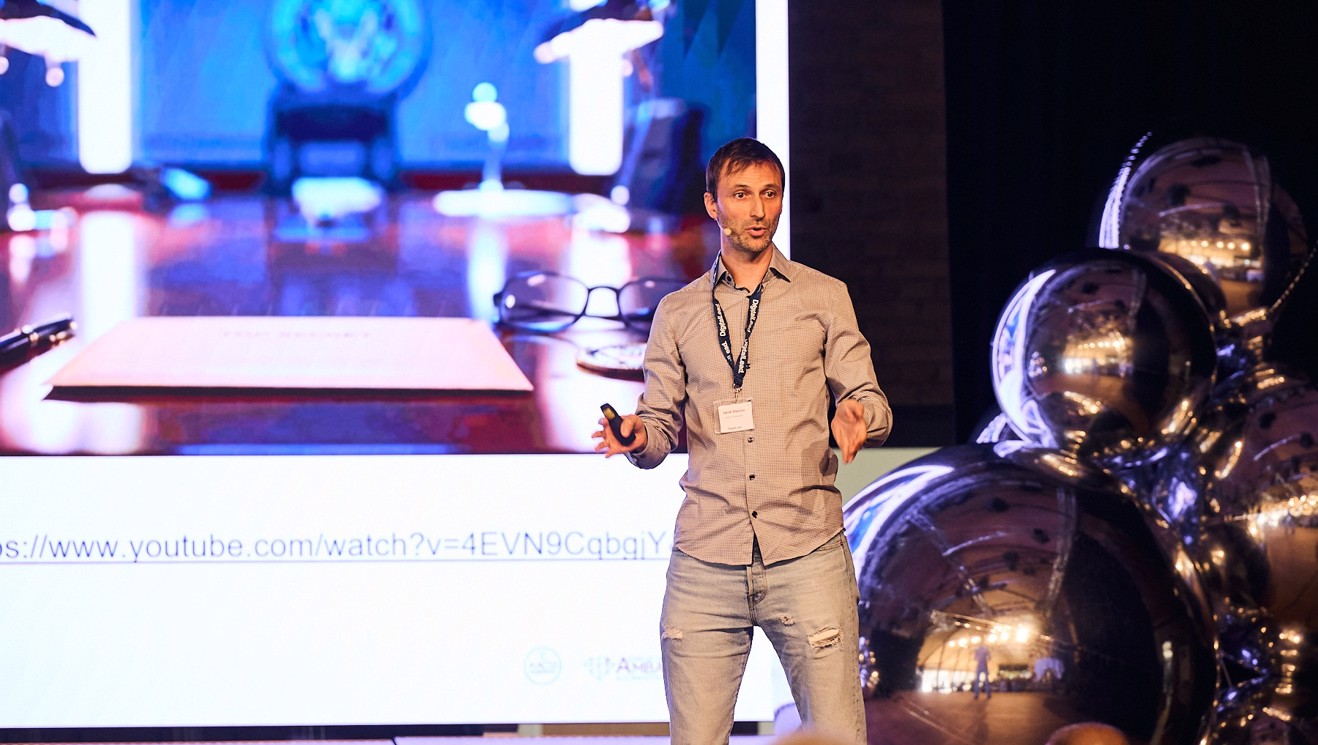
Artificial intelligence is evolving at extraordinary speed. Predictions from leading tech hubs such as The San Francisco Consensus suggest that advanced AI may emerge within just a few years. For organisations, this creates both urgency and uncertainty. How do we prepare for a future where machines can assist with almost any task? And how do we ensure that people remain at the centre of this transformation?
At Aarhus University’s Center for Hybrid Intelligence, Professor Jacob Sherson and his team are developing a powerful alternative to the “AI-first” mindset currently spreading across industries. Their vision - Hybrid Intelligence - places human value, creativity and judgement at the heart of technological development. Instead of allowing AI to “take over” processes, Hybrid Intelligence focuses on designing systems where humans and AI work together, each contributing what they do best.
What Is Hybrid Intelligence?
Hybrid intelligence is not about automation for its own sake. It is about creating synergetic human-AI partnerships where the combined performance exceeds what humans or machines could achieve alone. In Sherson’s words, it is about keeping humans in the loop and ensuring they play an active role in shaping the AI systems they work with.
Hybrid Intelligence is built around several core principles:
- Explicit human-AI complementarity – identifying which parts of a task require human intuition and which can be supported by AI prediction.
- A collaboration mindset – seeing AI as a partner rather than a threat.
- Workflow-empowering assistants – AI tools designed around real tasks and real employees, not generic use cases.
- An employee-centric approach – focusing on learning, innovation and psychological safety.
- A sustainable model for organisations and society – where technology enhances human capability instead of replacing it.
This stands in contrast to the trend Sherson warns against: many organisations are racing to become “AI-first”, assuming that efficiency gains will secure competitive advantage. But as he emphasises, “efficiency is not a differentiator when everyone can achieve it”. True disruption lies in becoming more human, not less.
Hybrid Intelligence at Aarhus University
Aarhus University has become a global pioneer in the emerging field of hybrid intelligence. The Center for Hybrid Intelligence brings together researchers from management, design, data science and cognitive science to build new methods, tools and models for human-AI collaboration.
The Center works closely with companies, public institutions and international partners to explore how employees can become “the playing coach for their AI”—actively training, shaping and improving the systems they use. This involves structured learning frameworks such as the 4P Transformation Model, focusing on:
- Partnership: Building trust and shared ownership between humans and AI.
- Psychological Safety: Ensuring employees feel safe to experiment and learn.
- AI Self-Efficacy: Developing the confidence and skills needed to work with advanced tools.
- Growth Mindset: Cultivating openness toward continuous improvement.
Early results are promising. In pilot programmes, organisations experienced increases of 20–35% in employees’ sense of partnership with AI, willingness to innovate, and confidence in using new technologies.
The New Hybrid Intelligence Platform: Turning Theory Into Practice
To help organisations take the next step, The Center for Hybrid Intelligence is launching a new platform designed to make hybrid intelligence accessible and actionable. The platform enables employees to:
- Build their own AI-workflow assistants without coding.
- Develop structured AI use cases and personal learning plans.
- Create, test and refine human-AI workflows using principles such as prediction-judgement mapping.
- Share best practices, prompt libraries and micro-innovations across the organisation.
Rather than importing “AI solutions” from large consultancies, the platform empowers organisations to develop internal Hybrid Intelligence capabilities - a critical competitive advantage in a world where off-the-shelf AI tools quickly become commodities.
The platform is recently released. Read more about the initiative via the link in the comments.
Why Hybrid Intelligence Matters Now
Hybrid intelligence offers a way forward in a time of rapid change. It helps organisations avoid the trap of blindly automating processes and instead build a human-premium economy, where empathy, contextual understanding and creativity become key assets.
Sherson’s message is clear: the future is not simply AI-driven - it is human-driven with AI as a powerful partner. Organisations that start building this hybrid capability today will be the ones shaping tomorrow’s landscape.